Modern and Vintage · Tutorials

How I prepare my PDF patterns

A few years back, I subscribed to Seamwork magazine, and this was also my first introduction to print-at-home PDF patterns. I remember putting them together correctly was not easy the first few times. Usually my pattern pieces would end up a little wavy, lines wouldn’t match up perfectly and most of all: it took a lot of time! I learned a lot over the past years and nowadays I manage to put together my PDF patterns quite fast and mostly flat. I thought I would share my technique today, so maybe it helps other people. I am going to make the Colette Myrna dress, an I will illustrate the process using this pattern.

The content of the Colette myrna .zip file

STEP 1: DOWNLOAD AND CHECK THE FILE

Most PDF patterns come in a .zip file with multiple separate files for patterns, instructions etc. As you can see below, for the Myrna dress, the file contains contents and instructions, and patterns for the two versions in different size ranges. It also contains the pattern in wide format, which can be used to have the pattern printed at A0 size. For today, however, I will focus on the print-at-home pattern. For me that means file 4: misses, all versions (I am sure I will make this dress more often so I want to have all pieces). If you don’t know your size, check it first.

STEP 2: SELECT SIZE

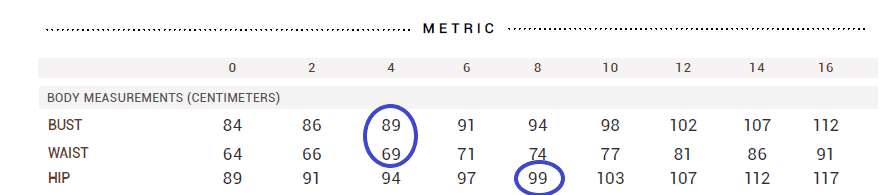
If you don’t know what your size is, start by checking out the instructions. The measurement charts can be found in the beginning of the document. Always measure over the undergarments and/or layers you intend to wear with your garment, do not pull the measuring tape super tight over your body and do not expect that your measurements fall in one size automatically. My own measurements fall between size 4 and 8 on different parts of my body!
STEP 3: USE YOUR PDF READER WISELY

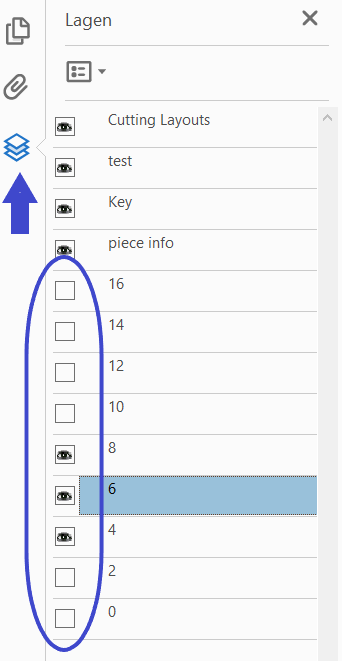
Once you downloaded and opened your pdf pattern file in a reader (I use Adobe), it is time to use the magic of layers! This is something I discovered recently and I feel quite stupid for not knowing… therefore I show it here 😉 In Adobe, there is a menu to the left, the bottom symbol will show you the layers in the file. Here, you can unclick everything you don’t need! By clicking the eye symbols in front of the sizes you are not intending to use, the will not show up on your printed file. Do not unclick everything at the top, you do want those. In the image you can see I just selected sizes 4-8.
STEP 4: PRINT!

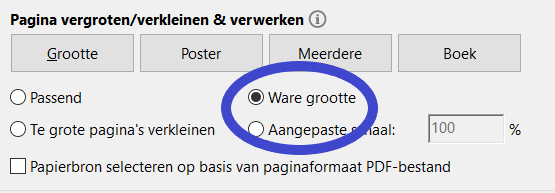
Now, you pattern is ready for printing. It is very important your pattern is the right size, so do a test print if this is the first time you print. In your printer menu, select 100% or true size. If you are not sure your printer will do it right, there is a scale box on the first page of the pattern. It is always smart to just print the first page, check the size of the test box against the indicated size and then continue with printing the other pages!
STEP 5: CUT OFF THE EDGES

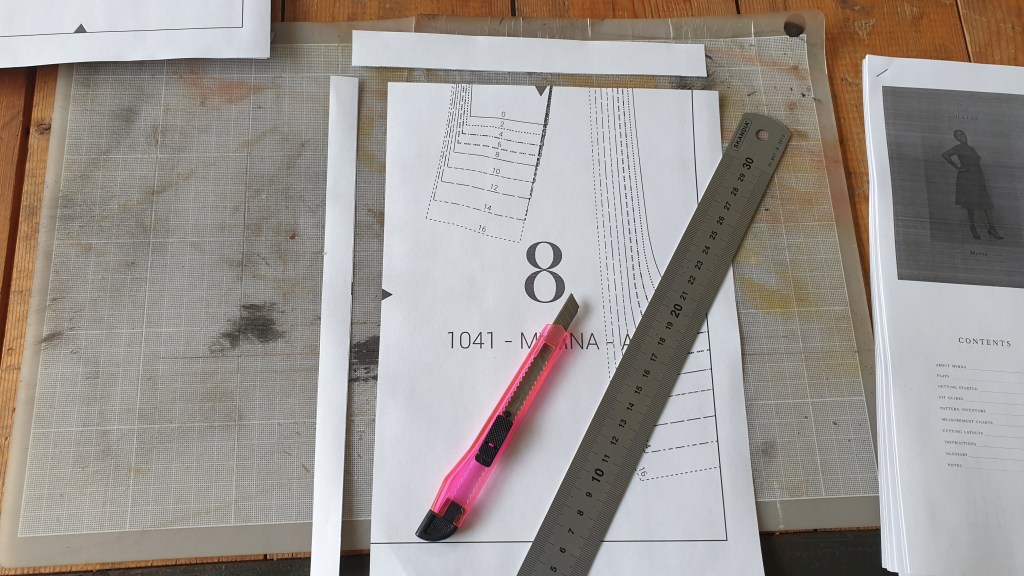
Now comes the slightly tricky part, or at least you will have to pay a little bit of attention here. You will cut off two of the edges of each piece, but you have to be very consistent here! In the image below, I cut off the left and top edges. This means that for the top row and the left column of the pattern you can omit this, but if it becomes too confusing, just cut them off, it doesn’t matter. I myself prefer to use a hobby knife and metal ruler, but some people prefer scissors or a special paper cutter. just make sure the edges are cut straight and you should be fine!
STEP 6: ALIGNING AND TAPING THE PAPER PIECES

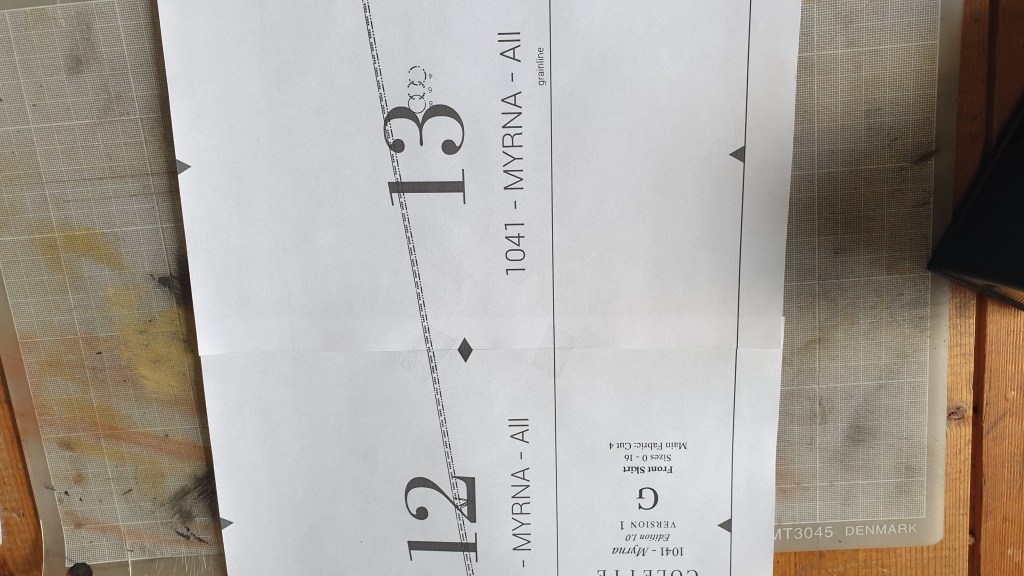
When all your pieces have been trimmed, you can start putting the pattern together. Most PDF patterns have some kind of marks on the edges, indicating where they go together. In this pattern, it is the grey triangle on each side. Personally, I prefer to look at the lines of the pattern pieces itself. If they continue smoothly and straight, I prefer that over perfectly alligned triangles. I know by now that my printer prints a bit wonky somtimes, and this method works best for me. When the pieces are aligned, I fixate their position with a few small pieces of scotch tape, before covering the whole edge in a larger piece. When applying larger pieces of tape, make sure you don’t apply it too ‘tight’ or the paper will start to curl and wave a little. I put together all rows first, and then tape all the rows together to complete the pattern.
STEP 7: GRADING BETWEEN SIZES

As shown in step 2, I fall between different sizes, most apparent between my waist and hip measurements. This is an easy adjustment to make, as grading between sizes usually suffices (especially for dresses and skirts). As you can see in the image below, I just draw a line (pink in the image) between the waist size 4 and hips size 8 pattern lines. The hip is usually indicated by a notch on the pattern. Just make sure the line doesn’t make any weird angles, and if you are still unsure, make a muslin before you cut in your fancy fabric.
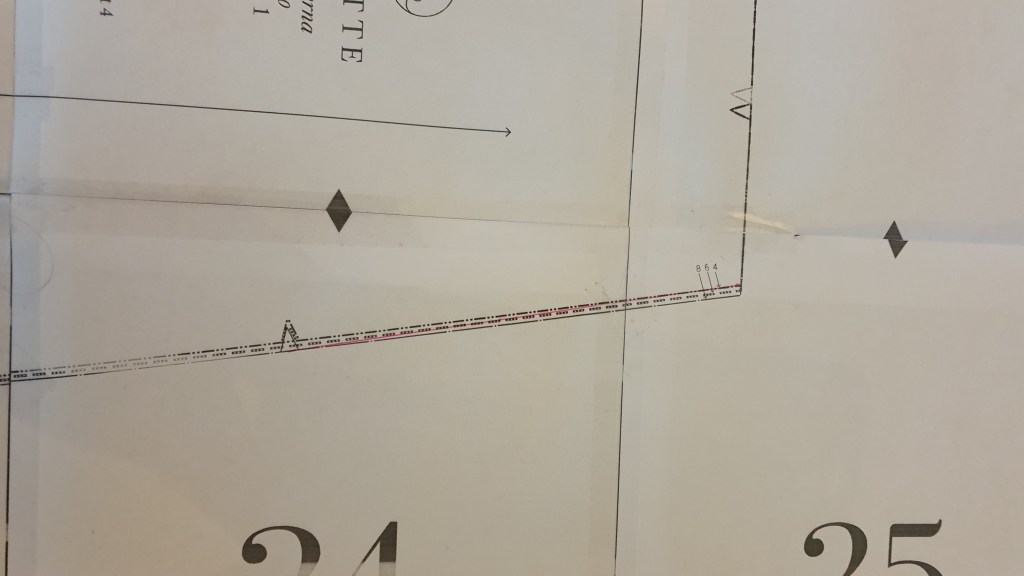
After those steps, you should have a pattern piece that is fully assembled! Depending on your preference, you can trace the pieces onto pattern paper, or just cut out the pieces directly. I have done both, and at the moment I prefer the latter. This is because I know the sizing and fit of Colette and Seamwork patterns is very good on me, and I can rely on the pieces to be correct. Would I be using a pattern brand I am unfamiliar with, I probably would opt for tracing first, so I don’t have to print and assemble a new pattern if the sizing is totally different.

I hope this post was helpful to you, and please let me know if you have any questions.
Make Nine · Modern and Vintage

Make nine 2021

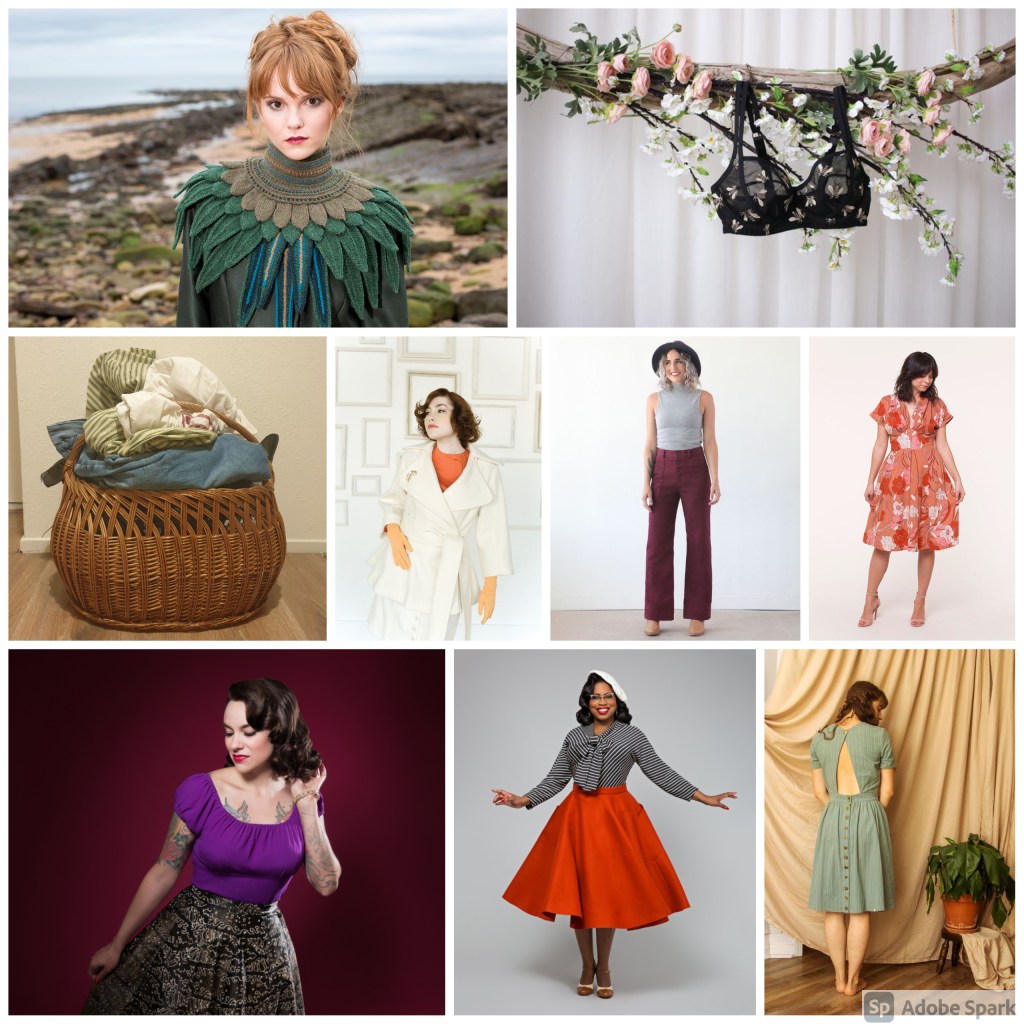
2021 is already three months old, and I finally decided it was time to start writing on this blog! I’m a bit late to the party, but I do really like those Make Nine posts I see popping up at the blogs and feeds of other sewists. I thought this was a perfect opportunity to start the year, and my blog, with a small wishlist of thing I plan to make, finish or learn. Some of those I already have the materials for, others are in my head or on my Pinterest board for ages. I am not going to keep this as a must-do list, but rather as a source of inspiration. I don’t know what 2021 will bring, but I hope it’s going to be a year full of creativity and beautiful projects!

So, without further ado, here is my Make Nine for 2021:

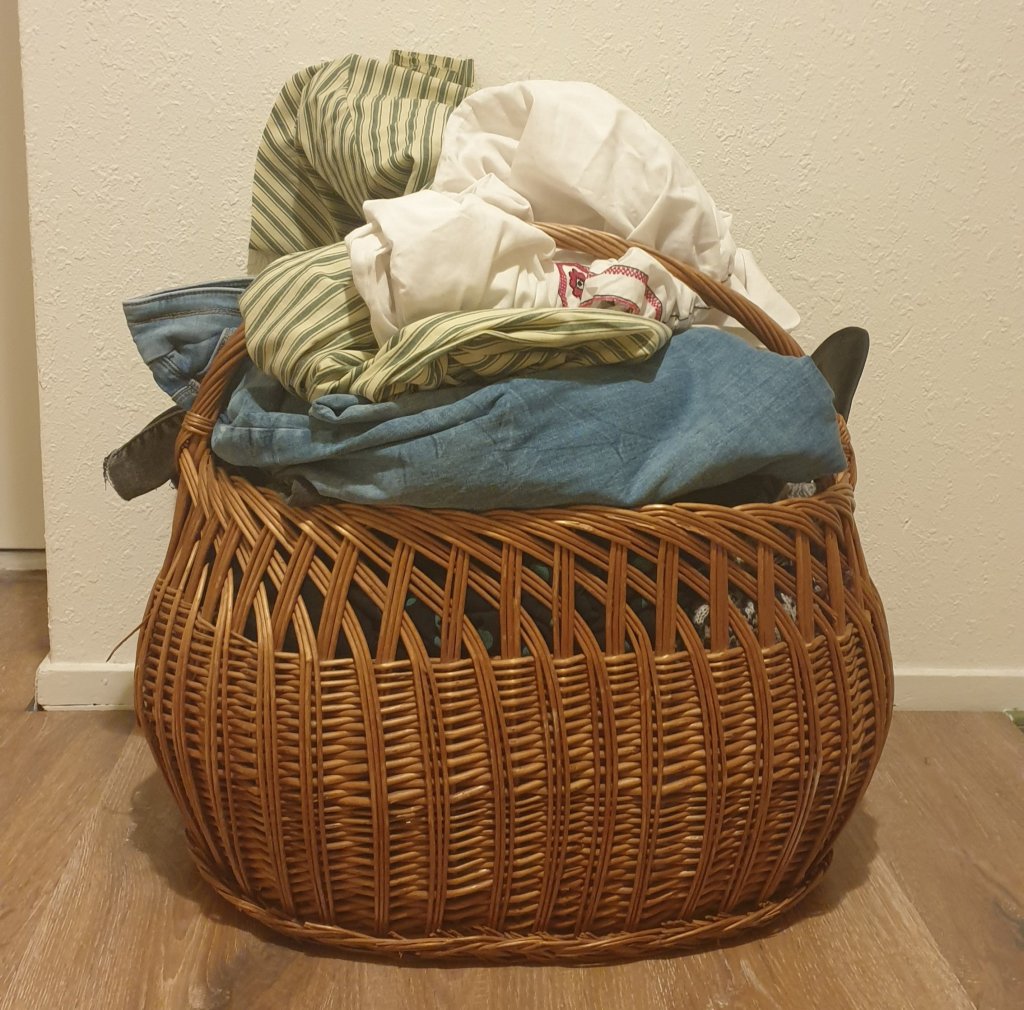
1: THE BASKET OF DOOM

The dreaded basket…

This basket has been in my sewing room forever… In previous versions it might have been a different basket or even a box, but I have always had a spot like this. Unfinished projects, repair jobs I am not looking forward to, clothing that has become too big, it all ends up here. As you can see, this basket is very full and quite frankly bothering me a bit. Over this year, I hope to empty it. I know there are also nice pieces in there, so who knows what I will rediscover?

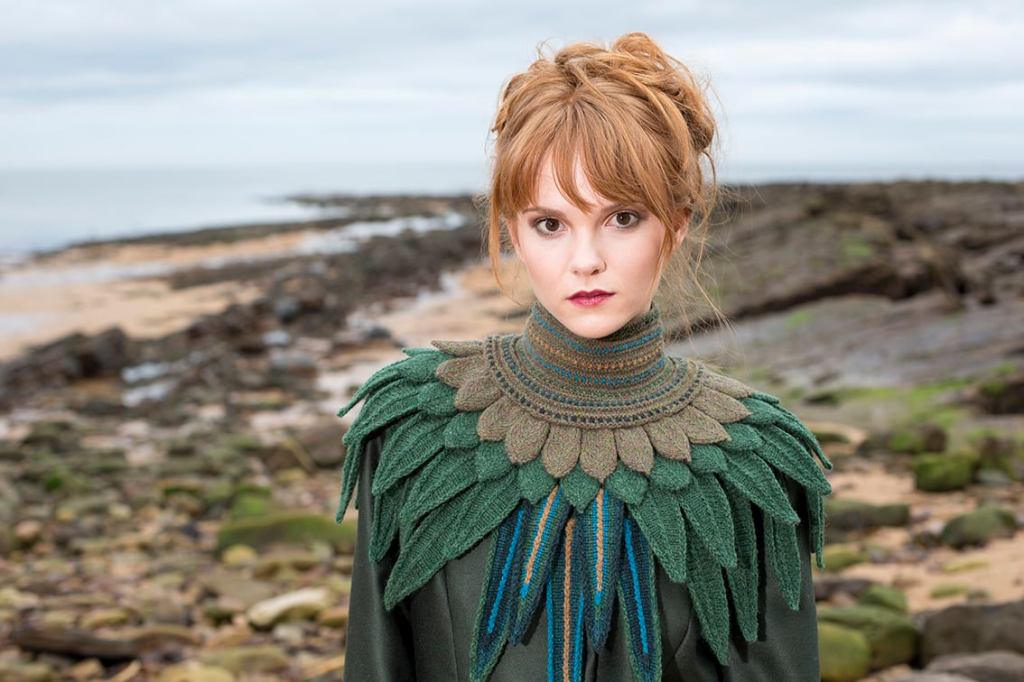
2. LAPWING COLLAR BY ALICE STARMOORE

I love knitting, and I have been eyeballing this absolutely gorgeous piece for a very long time already. Somewhere in 2019 I got the Glamourie book by Alice Starmoore, and was instantly captivated by the beautiful images and pieces. This collar is not in the book itself, but can be bought as a separate kit form her website. Though it is maybe not as wearable as some other pieces, I think I would very much enjoy making it and find a way to wear it anyway. Sometimes it’s just form over function right?

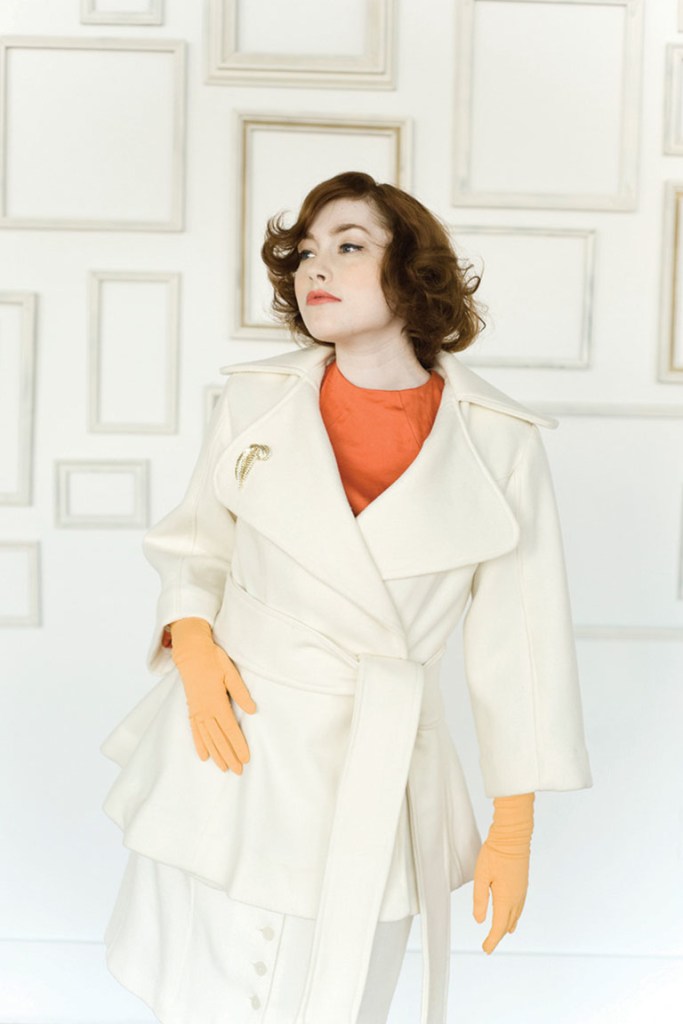
3: COLETTE LADY GREY COAT

I do have a lot of coats, but this one stands out as another coat I would like to make and will definitely wear. Inspired by Gertie’s Lady Grey Sew-along, I would like to try my hand on some tailoring techniques instead of just putting it together as per the instructions. This is a good opportunity to expand my skills and practice some slow sewing.

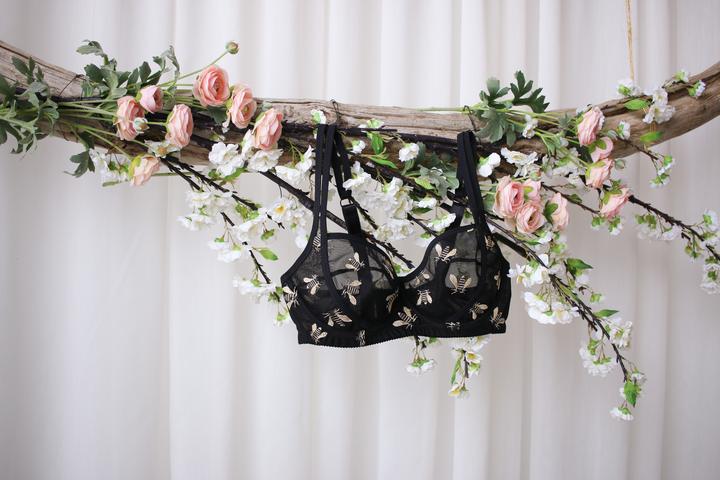
4: A PIECE OF LINGERIE

I have been sewing for about 22 years now, but never made a single bra. I did make tons of historical underwear (linen undershirts, corsets and the likes) but never an actual piece of underwear I would wear in my day-to-day life. During my sewing I love listening to Love to Sew Podcast, where making lingerie is discussed regularly. Helen and Caroline always say it’s so much fun and not that hard, so I feel like I should try at least once.

5: A PAIR OF PANTS

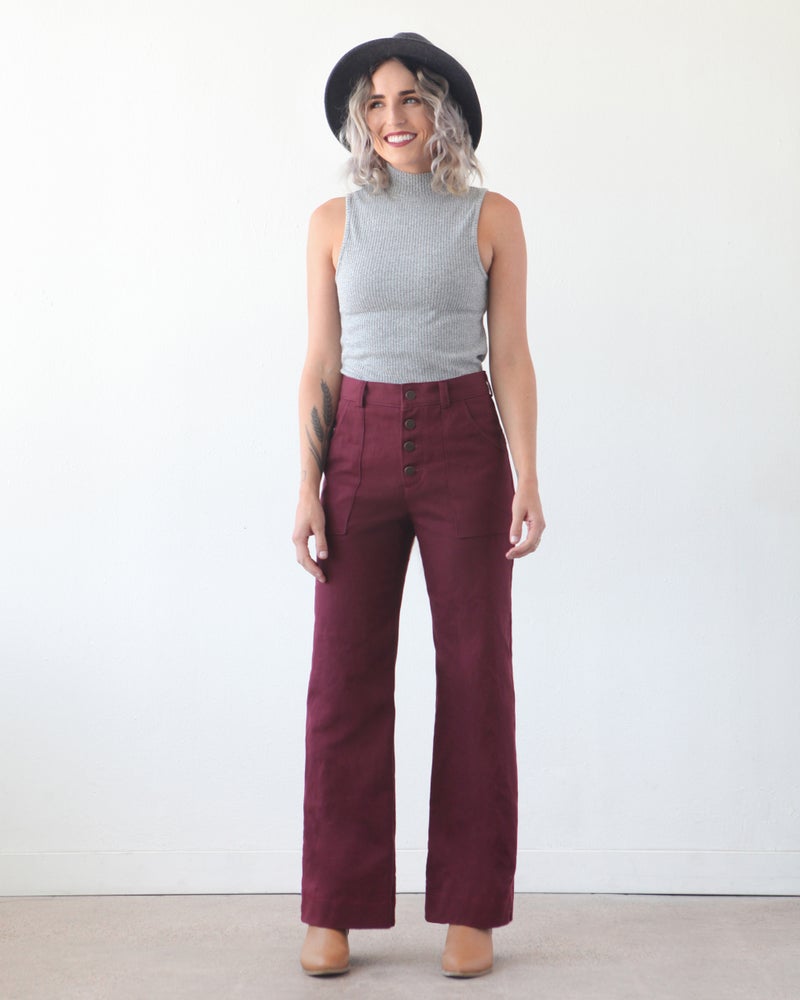
Ah yes, the dreaded pants… I hate buying pants and jeans, and I think I’ve sewn a pair of pants only once or twice. I always considered my body shape to be ‘difficult’ when it comes to pants, as the size difference between my waist and hips is about two sizes. I plan to write a piece on body image and sewing in the future, but I think sewing a pair of pants fits really well with that theme. I am not sure yet which pattern I am planning to use, but the Lander Pants by True Bias seem like a good option.

6: RITA BLOUSE

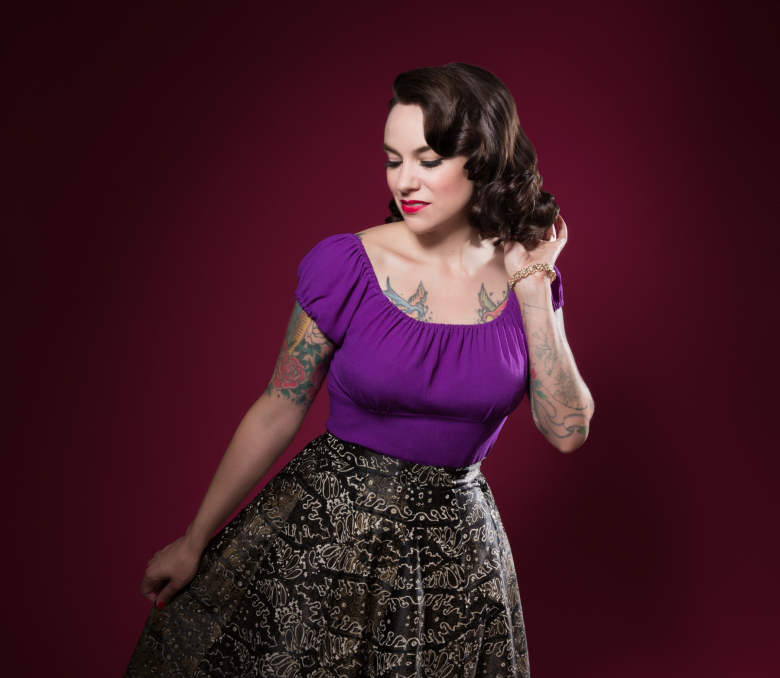
For the past few years, I have been gravitating towards vintage style pieces. I love wearing them, but mostly at special occasions. Finding pieces that are casual and practical enough to wear in day to day life was not high on my priority list, but I definitely want to include more of those. The Rita Blouse by Gertie reminds me of an H&M blouse I had in high school. I wore it till it fell apart, but never made or bought something similar to it. I feel like I will make and wear multiple of those. It looks like a perfect wardrobe staple to add an instant vintage feel. Gertie even offered instructions on her blog te sew it in a knit, so I might try both wovens and knits!

7: CIRCLE SKIRT

Tying into the “I want more vintage vibe in my wardrobe” subject: circle skirts! I love them, they are so comfy to wear and can be styled both elegant and casual. A big plus is that they also fit my body type quite well, so I truly don’t understand why I don’t have a single circle skirt in my wardrobe. An option would be the Stanwyck skirt by Charm patterns if I would like to have all the nice extras, but if it’s just a simple circle skirt I can also draft the pattern myself. We will see!

8: COLETTE MYRNA

Last year, I made a long Myrna dress for a wedding, in a lightweight green linen. I instantly decided I need more Myrna in my life! The dress looks so elegant, but is very comfy to wear. I can’t wait to wear it again next summer! Because I already have a long one, I want to make the knee-length version too. It might be a bit more practical and work-appropriate than the long version. It also comes together in a breeze, so a perfect last-minute summer project in my book.

9: UNTITLED THOUGHTS AMELIE DRESS

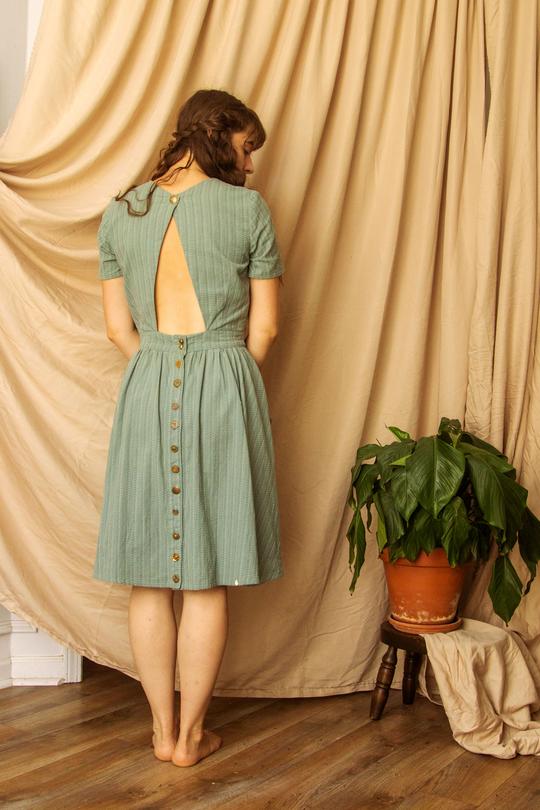
This dress has been on my wishlist for a very long time… The back is so interesting, and I have seen it going around the sewing community for quite a while now. In light of recent developments (as in: me getting a tattoo on my back very soon) I might want to sew clothing that shows pieces of my new ink. I do see that the fit is very different on different people, so it might be a challenge to get it to sit right. I am up for the challenge though…

With 9 months to go in this year, I think I will not finish everything on this list the coming year. With COVID going on, nowhere to wear your fancy clothes to and a sewing mojo that is below zero, I will not force myself into making everything on the list. I do hope however that it will serve as a reminder to myself of what I know I love to do, pick up the sewing a bit more and even write about it on this blog. Thank you for reading, feel free to leave a comment and I hope that more will appear on this corner of the internet over time!